The Other Side of the Sentence
Updated: 5 days ago
Written by: Mackenzie Guirsch
When I was three years old, a sneaker wave took me.
Our mother had taken us to the beach. Lisa, who is fourteen years older than me, was put in charge. The ocean grabbed hold of me and my brother, who was four then, and swept us away. Lisa fought through the current to reach us, swallowing water, and held us above her head until we were safely back on the sand. She saved our lives while risking her own.
That's who Lisa is. That's who she always has been.
Nobody tells you that when they talk about her incarceration.
For most of my adult life, Lisa has been in and out of jail and prison. Yet no sentence, report, or label has ever mentioned the sixteen-year-old girl who ran into the ocean for her little siblings without hesitation. The system doesn't have a box for that. But I do.
Everyone has something to say about incarceration. Politicians debate it. Documentaries expose it. Advocates reform it. But in all those conversations, there's a voice that rarely gets a seat at the table: the family members on the outside. The ones who didn't go in, but never quite got to stay fully out either.
I memorized the rules before I went to visit her the first time. I had never been to a prison. So, I cleaned everything out of my car for fear that it would be searched and I would wind up behind bars with her. I made sure to wear the right shoes. Removed my jewelry. Our mother and I made the journey, and I scrutinized every inch of her, making sure she followed the rules as well. We were early. The fences and barbed wire filled my vision as we sat in my car waiting.
By the time we walked through the doors and got into line, my anxiety had reached its limit. What if I had a knife or a gun I didn't know about? What if I had drugs? Obviously, I had none of that, but those thoughts still crossed my mind. We were herded through check-in along with the other visitors, escorted through a series of gates that the guards in control rooms had to open for us. I flinched the first time I heard the gates buzz. It gave me a feel for what life was like for her. Being told where to go and when. Not able to move freely. Our mom and I took our seats at a table, surrounded by the other waiting families, and I tried not to fidget under the scrutiny of the guards who shouted instructions.
And then my sister walked in.
I'll never forget the look on her face. The pure joy that radiated from her faded to a crushing sadness when she saw our mother's tears. We spent the time talking and buying her treats from the vending machines. She stepped over the line, and I almost had a heart attack — I thought our visit would be cut short, and she would be taken from us. Again. But the guards let it slide. We took photos at the photo booth that I still have proudly posted on my refrigerator. On the drive home, I got a ticket for running the toll booth. I blame my sister entirely for that.
Nobody ever asked me what it was like.
There were the polite questions, how is she doing, is she okay, but those are questions about her. Rarely does anyone ask: How are you doing? What does it cost you to love someone the system has decided to discard?
What it costs is this: You learn to reorganize your life around the windows you're given. Lisa learned my schedule. I made myself available. It didn't matter what I was doing. If she called, I answered. Because I knew what it meant to pick up. And I knew what it would mean not to.
She wrote me letters. Drew me pictures. I kept them all, every single one. They live in a box I consider one of my most important possessions, because inside it is proof that love doesn't get locked up with a person.
There is one letter I'll never forget. It was stapled shut, and a short note on the outside told me to rip it open as fast as I could. So, I did, because she was my older sister and I trusted her. Cottonwood fluff erupted in my room, my ceiling fan sending it everywhere. Even my poor cat got some stuck to her. I was picking it up for weeks. I still talk about that letter, because that's Lisa. Even from inside a prison, she found a way to reach through every wall between us and still be fully, completely herself.
She never missed a birthday. Never missed a holiday. Though we were separated, we still celebrated together. She was present in the ways she could be, and I made sure I was present too. I supported her every way I could. I put money on her books, bought her the holiday boxes, shared stories from life outside the fence. I sent her books, and those books got passed around the prison like prized possessions, which, in there, they were. I sent her my favorite series and told her to always hold on to them. And she has. She took them from that prison and made sure they were safe.
Our mother was diagnosed with cancer a few months into her sentence. Those were the hardest calls.
I remember the fear in Lisa's voice. Not just fear, but helplessness. A kind of panic I had never heard from her before, and she didn't panic. She was locked behind bars while our mother was facing surgeries with unknown outcomes, and there was nothing she could do about it except call me, again and again, and ask me questions I didn't always have answers to. The utter powerlessness of that, for both of us, will forever stay with me.
But she didn't collapse into it. She built a support system on the inside. Interrogated the nurses, peppering them with questions about cervical cancer. She did the research, and she came to our calls prepared, with information, with steadiness, even when I knew it cost her everything to hold herself together. Even though she was miles away, she was right there with me through it all.
But I'll be honest about something, because this post is supposed to be honest: I kept a lot of this a secret.
Lisa was the black sheep. Our parents were disappointed. And somewhere along the way I learned to hide the relationship: the support I gave her, the books I sent, the money, the phone calls, the letters and cards I stashed away. I felt like loving her openly was something I had to protect, tuck away, keep separate from the version of my life I showed the world. That is its own kind of cost. Loving someone in the shadows, not because you are ashamed of them, but because you know the world has already decided who they are, and you're not ready to fight that battle every single day.
Nobody prepares you for the changes you must make. I could no longer just pick up the phone and call my sister. I was now her lifeline to the outside. The one who told her the truth, who wouldn’t hide what was happening in our lives.
For ten years, I listened to her cry because our father and brother would not respond to her letters. Would not answer her phone calls. I witnessed our father pick up her letters and cards from the mailbox, read them in secret, and never mention them.
But here's what I always knew, even when I couldn't say it out loud — Lisa was brilliant. Hungry for learning in a way that never dimmed. She didn't just learn inside those walls. She taught. She ran the GED math classes at the prison, pouring what she had in abundance into other women. That's Lisa. She couldn't help it. Even in the places the world puts people to be forgotten, she was building something.
I was there the day she was released from prison for the last time. Our mother and I met Lisa's wife, Rachel (who had been released two weeks earlier), for the first time in person, and immediately understood why Lisa had fallen in love with her. Our little trio was at the prison bright and early, waiting for our loved one to exit those gates.
We took them to eat at Shari's and to get cell phones, clothes, and necessities. The whole time I watched my sister. How she had changed. How she hid her fear. Her world may have stopped when she went to prison, but ours hadn't.
Technology had progressed. The cities she knew had developed and grown. Clothes were unfamiliar to her, and despite our efforts, she wanted nothing but basketball shorts and T-shirts. As a surprise, I took her to the Oregon Duck store and told her to pick out anything she wanted. She chose a rain jacket and a backpack for college.
I didn't fully understand how prison strips someone of who they are until I witnessed my sister, the one who was always tough, who always had the answers, frustrated and overwhelmed at the thought of wearing jeans.
But she persevered.
Today, she is an author, a P2P scholar, an EdTrust fellow, and the first of our siblings to earn a bachelor's degree. When people hear that, they call it a transformation. But I have a box of letters that says otherwise. Stories ingrained in my heart that prove otherwise. The world is only now catching up to what I have known my whole life, what I've known since she pulled me out of that ocean.
What nobody asks is how I held onto that knowing. How I kept seeing the whole person when the system only showed the world a fraction. How I loved quietly, secretly sometimes, stubbornly always.
Incarceration doesn't just happen to one person. It radiates. It reshapes the lives of everyone who loves them.
And the people who love them? We answer the calls. We rip open the envelopes. We make the drives.
We hold on, because we always knew there was something worth holding onto.
Lisa always knew it too. She proved it the day she ran into the ocean for me.
This article was previously published by Prison to Professionals (P2P)
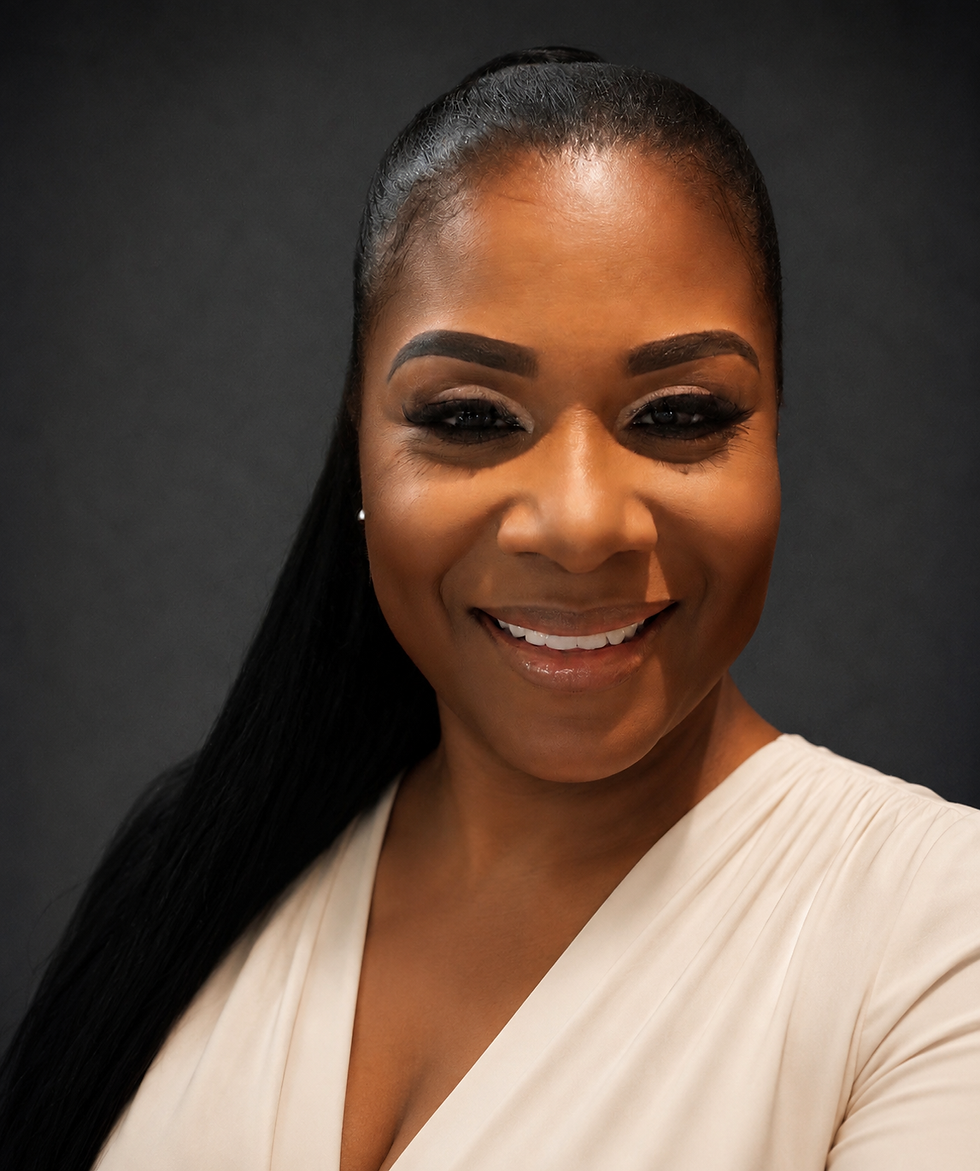
Writer and Contributor Mackenzie Guirsch
Mackenzie Guirsch is a writer from Washington State. Her writing is often inspired by her own life and the people closest to her. “The Other Side of the Sentence” was inspired by her sister’s experience with incarceration and Mackenzie’s experience loving and supporting her through it.


Comments