
July-September Issue

Editor's Note
There are seasons in life when survival feels like victory. Seasons where simply making it through another day, another disappointment, another setback, another closed door feels like enough. Eventually, if we are fortunate, something begins to shift. We stop asking how to survive and begin asking something much deeper: What parts of me am I ready to take back?
That question sits at the heart of this issue. Within these pages, you will find stories of individuals who refuse to remain defined by circumstances that could have easily consumed them. People who have chosen restoration over resignation, courage over comfort, and growth over limitation. Their journeys remind us that reclaiming your life is not about returning to who you once were, it is about becoming who you were always meant to be.
My hope is that this issue encouraged you to pause and reflect not only on what life may have taken from you, but also on what still belongs to you. Your voice, your dreams. Your peace. Your identity. Your future.
May this issue remind you that healing is possible, restoration is available, and it is never too late to reclaim what matters most.
With gratitude,
Dr. Clover A. Perez
Editor-in-Chief
RE/CLAIMED Magazine
June - September Theme
RECLAMATION
Taking Back What Was Lost
There comes a point in every healing journey when survival alone no longer feels like enough. A point where simply enduring trauma, injustice, incarceration, abuse, systemic harm, or personal devastation no longer satisfies the deeper need for restoration. It is in this space that reclamation begins.
Reclamation is not passive. It is not simply about recovery, nor is it the quiet act of moving on. Reclamation is the bold and deliberate decision to take back what life, systems, pain, or oppression attempted to steal. It is the process of re
storing identity after it has been stripped away, reclaiming dignity after it has been diminished, rediscovering voice after silence, and rebuilding purpose after disruption.
For the July-September issue of RE/CLAIMED Magazine, we focus on the profound and transformative journey of reclaiming one's life. This theme speaks to those who have endured profound hardship yet refuse to let those experiences define who they are. It honors individual who are actively rebuilding after trauma, challenging systems that sought to erase them, and restoring the parts of themselves that were fractured along the way.

Subscribe
Be A Contributor
Read our Blog
Share Your Story
HOW LOSS BECAME MY PURPOSE
Finding meaning, healing, and purpose after profound loss
By Ayana Thomas
There was a time in my life when grief was not just something I experienced. It was something I survived every single day.
People often think grief only comes from death, but my grief came in layers. It came through abandonment, trauma, incarceration, homelessness, heartbreak, silence, survival, and becoming someone I barely recognized, just to make it through another day. I know what it feels like to carry pain so deep that it changes the way you see yourself and the world around you. I know what it feels like to wake up exhausted before the day even begins because your mind, body, and spirit have been carrying too much for too long.
.png)
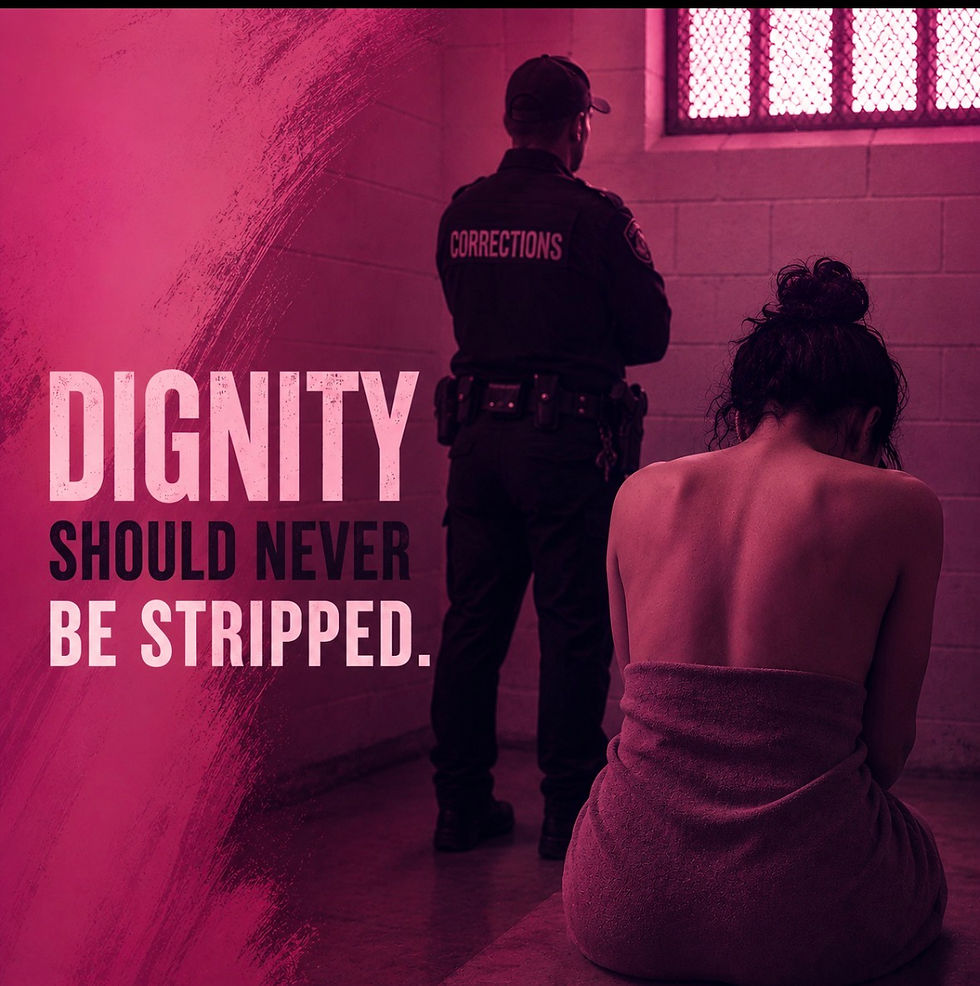
Every day, thousands of incarcerated men and women are subjected to one of the most invasive practices within the correctional system: strip searches. This investigative report examines the lasting psychological impact of these searches and explores emerging technologies that may offer a more humane path forward.
DIGNITY SHOULD NEVER BE STRIPPED

When I was a little girl growing up in the Baptist church, I often heard this scripture whenever someone was struggling. Those words were meant to comfort, as if pain and trauma could disappear if you simply had enough faith. What I internalized instead was that if you carried enough hurt, you just had to trust hard enough to find joy eventually.
At an early age, I became familiar with pain. I experienced deep wounds long before I understood how to process them. My parents divorced, and over time, both emotionally disengaged from my brothers and me. I grew up hearing messages that my body was not good enough, creating body dysmorphia that eventually developed into an eating disorder. There were conversations about weight-loss interventions and even gastric bypass surgery before I had left junior high. Hit after hit, my family showed me there was no safe place for me to simply be myself.
I became the protector of everyone else’s pain. Somewhere along the way, I convinced myself that if people hurt me enough, they would eventually learn how to love me. In my young mind, pain became intertwined with love.