Children Should Not Be Sentenced To Life In Prison
Society must no longer remain passive while children are condemned to spend the rest of their natural lives behind bars. This is a senseless practice that defies reason, betrays justice, and deepens racial wounds. It contradicts everything known about adolescent development, undermines the very purpose of rehabilitation, and perpetuates systemic inequities that target the most vulnerable. This is not merely a failure of policy; it is a moral crisis. The public cannot simply comprehend or sympathize with these injustices; individuals must embody the conviction that children deserve a chance to grow physically, emotionally, and mentally. Every child deserves the opportunity to heal and to be redeemed. Change cannot be left to hope or delayed by fear—it must be demanded through legislative action, judicial courage, and community resolve. Children should not be sentenced to life in prison because to do so is a failure of compassion, a distortion of fairness, a perpetuation of bias, a rejection of societal values, a surrender to vengeance, and it is the collective responsibility of society to ensure this truth becomes law, not just belief.
PULL QUOTE
The public cannot simply comprehend or sympathize with these injustices
Sentencing children to life in prison is a moral failure that contradicts the foundational principles of justice, growth, and human dignity. This practice disregards the reality that children are still developing, emotionally, cognitively, and morally, and denies them the opportunity to evolve, heal, and be redeemed. It undermines the purpose of rehabilitation and reinforces systems of exclusion that target society’s most vulnerable. The public must move beyond passive sympathy and embrace the conviction that every child deserves a chance to grow. Change cannot be left to hope or delayed by fear; it must be demanded through legislative action, judicial courage, and community resolve. Children should not be sentenced to life in prison, because doing so abandons the belief in transformation and imposes finality on those still in the process of becoming.
This contradiction is especially stark when considering the protections society affords children in other areas of life. Minors are deemed too immature to smoke, drink, drive unrestrictedly, or give legal consent, yet are treated as fully culpable adults when facing the harshest punishment imaginable. To sentence a child to die in prison is to ignore their capacity for change and to confine them to environments where harm is not only possible but likely. Forgiveness, often celebrated as a societal virtue, is rarely extended to youth in the justice system. The result is a system that punishes children not just for their actions, but for their identity, particularly for Black youth, who are disproportionately charged and incarcerated as adults. In Maryland, 84% of youth charged as adults are Black, and the state ranks second nationally in per capita youth adult charges (Campaign for Youth Justice). These disparities reflect systemic bias and reveal a justice system more invested in permanence than possibility.
PULL QUOTE
"To sentence a child to die in prison is to ignore their capacity for change and to confine them to environments where harm is not only possible but likely."
Reform efforts in Maryland offer a glimpse of what justice could look like when informed by developmental science and constitutional law. Senate Bill 389 allows courts to transfer minors convicted as adults to juvenile court for sentencing, especially in cases involving prior victimization (Maryland General Assembly, Senate Bill 389). Senate Bill 422 expands juvenile court jurisdiction and raises the age threshold for automatic adult charges (Maryland General Assembly, Senate Bill 422 Fiscal and Policy Note). These reforms align with Supreme Court rulings that emphasize individualized sentencing and the potential for rehabilitation (Miller v. Alabama 567 U.S. 460). While critics argue that certain crimes warrant life sentences, this view neglects the principle of proportionality and the moral imperative to treat children as evolving beings. Children should not be sentenced to life in prison, and it is the responsibility of lawmakers, courts, and communities to ensure this truth becomes not only law but a lived reality.
Some argue that sentencing children to life in prison is necessary when the crime committed is especially violent or irreversible. Yet research shows that children’s brains are still developing, particularly in areas tied to impulse control and moral reasoning. A sentence of life without parole ignores their capacity for growth and rehabilitation, reducing them to the worst act of their youth rather than acknowledging their potential for change. They believe that the severity of the act should outweigh the perpetrator's age, and that justice demands permanence. But justice is not synonymous with vengeance. True justice balances accountability with humanity, recognizing that age profoundly shapes culpability. Permanence in sentencing denies the possibility of redemption, undermining the very principles of a system meant to rehabilitate as well as punish.
PULL QUOTE
" Yet research shows that children’s brains are still developing, particularly in areas tied to impulse control and moral reasoning."
Others contend that leniency for juvenile offenders undermines accountability and disrespects the pain of victims and their families. Accountability does not require extinguishing hope. Offering juveniles a chance at rehabilitation honors victims by preventing future harm and transforming offenders into contributors to society. Respect for victims is not diminished by mercy; it is deepened when justice seeks to heal rather than perpetuate cycles of suffering. These perspectives are rooted in fear, grief, and a desire for closure. While these emotions are valid, policy cannot be built on raw pain alone. Closure is not achieved by condemning children to die in prison; it is achieved when society demonstrates that even in the face of tragedy, compassion and growth remain possible. To legislate from fear is to abandon the hope of a more humane justice system.
PULL QUOTE
"Respect for victims is not diminished by mercy."
However, justice must be more than reaction; it must be reflection. The belief that harsh punishment ensures safety ignores the reality that children are still developing, and that transformation is not only possible, but common. Parole boards and individualized sentencing do not guarantee release; they offer a chance to prove change. As noted in Maryland’s legislative efforts and echoed by legal experts and community advocates, reform does not erase consequences; it reimagines them in light of growth. As the Georgetown University Center for Juvenile Justice Reform notes, “juvenile justice systems have undoubtedly made extraordinary improvements over the past two decades… in alignment with what research shows works to improve outcomes for youth” (Weber, Umpierre, & Bilchik, 2018). Without such evolution, the system risks reverting to punishing for its own sake—vengeance rather than accountability.
PULL QUOTE
"Justice must be more than reaction; it must be reflection."
Children should never be sentenced to life in prison. This practice reflects a failure of compassion, a distortion of fairness, and a denial of the belief that growth is possible. True justice must balance accountability with humanity, especially when dealing with those who are still becoming. Solutions lie in expanding rehabilitative programs, strengthening parole review processes, and ensuring that legislation. As noted in Maryland’s legislative efforts and echoed by legal experts and community advocates, reform does not erase consequences; it reimagines them in light of growth. Maryland’s Juvenile Justice Reform Act of 2024 codifies this principle, emphasizing rehabilitation and individualized review over blanket punishment (Maryland General Assembly, 2024). If society continues to treat children as irredeemable, it forfeits the very principles that make justice transformative. A child’s worst mistake should not be a life sentence; it should be the beginning of a better story.
Written by: Jakobe Jenkins
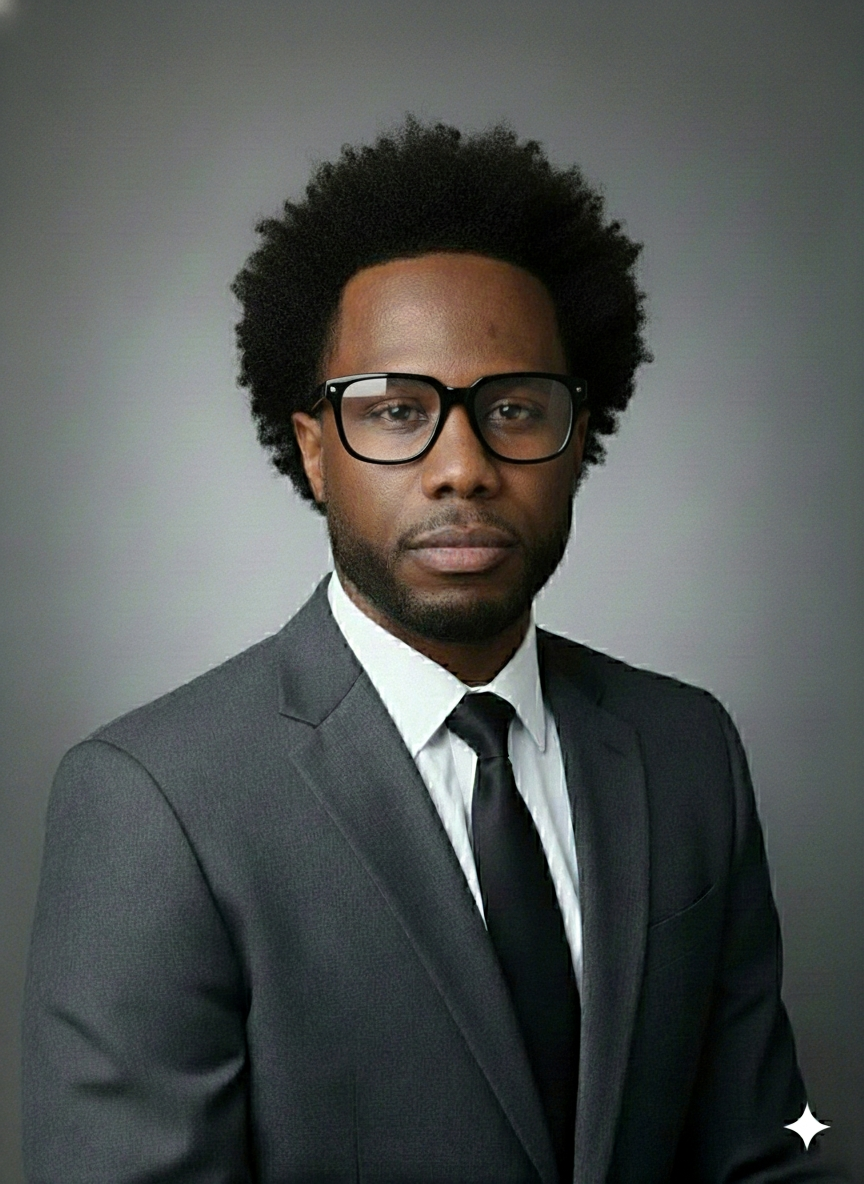
Jakobe Jenkins is a justice-impacted healing-centered practitioner, system thinker, and writer whose voice is forged from
lived experience and relentless self-determination. Incarcerated at sixteen and unable to read or write, he taught himself literacy out of personal shame and a fierce determination to reclaim his own mind.
Over more than twenty-six years of confinement, that evolved into a disciplined writing practice, one that now shapes
his forthcoming book, From Root to Canopy. His work blends emotional depth, structural clarity, and trauma-informed insight, offering pathways toward dignity, healing, and possibility for those most impacted by harm and systemic injustice.


Comments